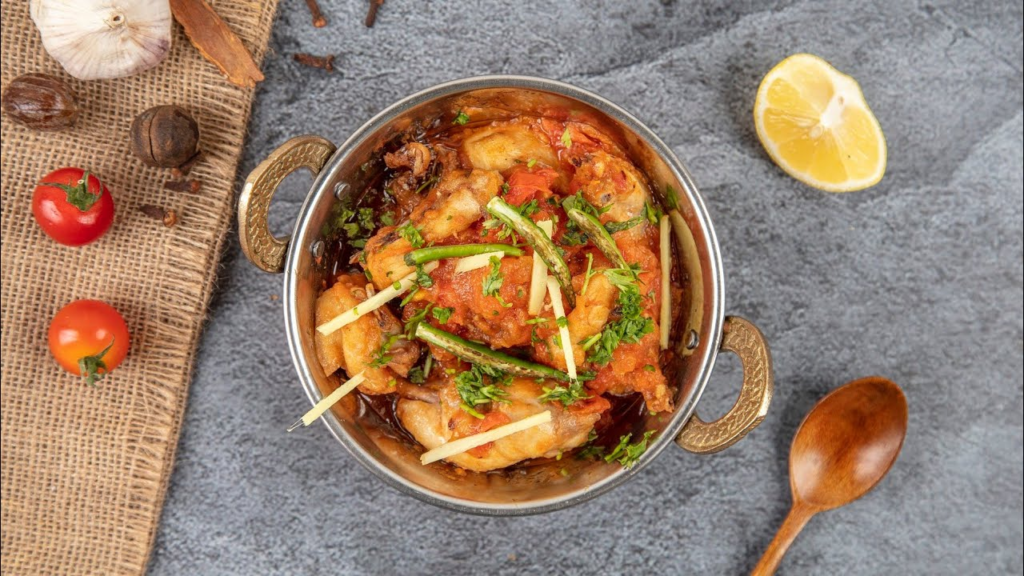
A properly made Chicken Karahi is something magical. The manner in which the oil divides on top of the sauce, the dark red hue of the tomatoes cooked to a thick masala, and the aroma of fresh ginger and green chilies striking the hot wok, it is one of those meals that makes a person close their eyes to have a moment before they take the first bite. When you have sat in a dhaba on the roadside in Lahore or Peshawar, and ordered a karahi, you know just what I am speaking of. The smoky, rich, and deeply spiced taste is one that people will spend years trying to do at home. It is good news because you can, indeed. And when you know the trick, you will never have to get take-out again.
I will take you through it all—what to put in, how to make it, and what little tricks to use to make a karahi good and great.
The Difference between a Restaurant-Style Karahi and a Home-Cooked One.
The initial point to note is that restaurant-style Chicken Karahi does not resemble the daily chicken curry we’ve all been brought up on. The factors that are crucial are the cooking vessel (heavy iron karahi or wok), high heat, a little amount of water, and a very strict order of ingredient addition. Karahi is usually cooked on a huge flame in most restaurants, hence the small amount of char and smokiness. When you are at home, you can actually be very intimate, cranking your stove to the highest heat and not being afraid to make things sizzle out loud.
One more fact to mention is that traditional Chicken Karahi is made without onions. It is a common custom among home cooks to add onion; however, karahi is a tomato-based dish. The foundation, the main part, and the taste are the tomatoes. The entire meal begins to come together as soon as you accept the challenge. You can also try our Crispy Chicken and Vegetable Spring Rolls Recipe as a perfect crunchy appetizer to serve alongside your karahi.
The ingredients that you will need include:
Other individuals leave it by squeezing lemon. This is optional, but very advisable
To serve four people, you will need one whole chicken, cut into medium-sized portions with bones, as the bones enhance the flavor.
You will require approximately four to five medium tomatoes, which are chopped roughly. Always use fresh tomatoes; tinned tomatoes will have a completely different flavor.
In the case of the oil, half a cup of neutral oil or pure desi ghee would be good in case you desire that additional richness.
The spices list is not elaborate but very specific:
one teaspoon of salt
one teaspoon of red chili powder
half a teaspoon of the black pepper
half a teaspoon of the cumin seeds
the quarter teaspoon of turmeric
and a teaspoon of the coriander powder
A full tablespoon of freshly crushed ginger, a tablespoon of freshly crushed garlic, four or five slit lengthwise green chilies, and a handful of fresh coriander leaves to garnish will also be required.
A little ginger slice, cut into fine julienne slices, to top it all, gives it flavor as well as appearance.
Other individuals leave it by squeezing lemon; this step is optional but very advisable.
The Cooking Process—Step by Step.
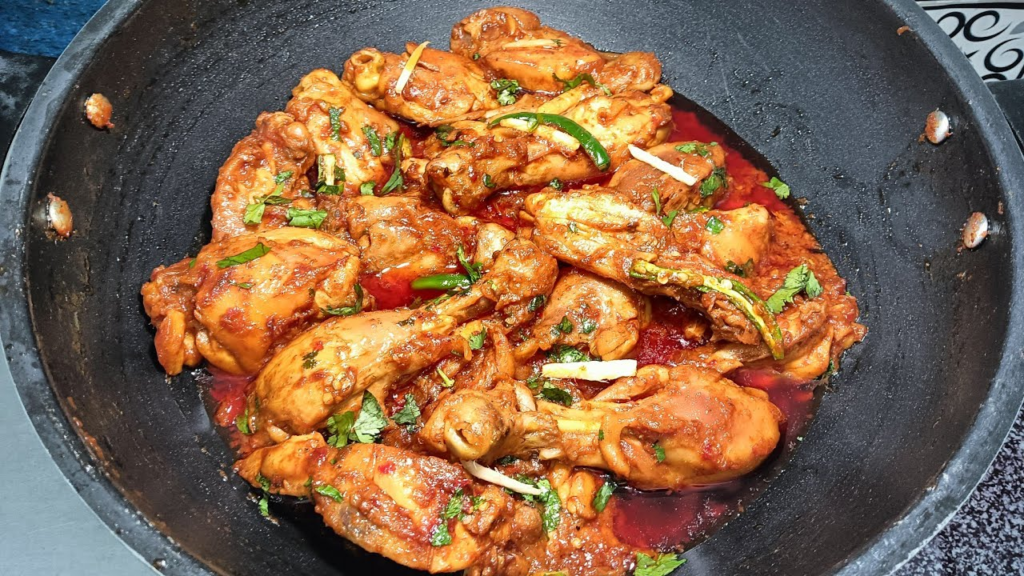
- Begin by boiling your karahi or wok on high fire. Add your oil and allow it to become hot enough. You desire to behold a little sparkling appearance on the surface. Add the ginger and garlic paste and allow it to fry for either forty-five seconds to a minute. This is an important step—the raw ginger and garlic will spoil your karahi and must therefore be cooked well until the raw smell is gone and they become slightly golden.
- Add the pieces of chicken directly now. Do not add water. Allow the chicken to cook in the oil and ginger-garlic, but on high heat, and ensure that you turn the pieces so that they acquire color on every side. This burning operation is in which a good deal of the flavor is formed. Bake in such a style, between eight and ten minutes, stirring now and then.
- When the chicken has attained a certain color, then you can add all your dry spices, the red chili, black pepper, coriander powder, cumin seeds, turmeric, and salt. Combine all of it to have the spices cover the chicken evenly. You will notice a great sizzle and may notice some smoke. Precisely, that is what you desire. Simmer for two minutes, maintaining a high flame.
- This is followed by the addition of your chopped tomatoes. Now, reduce the heat to medium-high and let the tomatoes cook down. Stir occasionally. The tomatoes will initially give up their water, which will later on evaporate gradually, and the tomatoes will start to decompose and blend with the spices and chicken juices. This is done in an approximate time of fifteen to twenty minutes, and this is the most crucial step of the whole recipe. Do not rush it. You want the masala to become thick, the oil to begin separating and accumulating on the sides, and the entire mixture to appear glossy and intense. This is the point at which the oil is separated, and this is referred to as the bhunai stage, which is the lifeblood of Pakistani cooking.
- When the masala is completely cooked and the oil has separated, add your salt. Add the slit green chilies, and stir them. In case you find that the chicken is not cooked all the way, cover the pan for three or four minutes under low heat. Next, take the lid off, turn the heat back on, and give it a final stir to mix it all intensely. This step is the point at which the oil is separated, and this is referred to as the bhunai stage, which is the lifeblood of Pakistani cooking.
- When the masala is completely cooked and the oil has separated, add your salt. Add the slit green chilies, and stir them. In case you find that the chicken is not cooked all the way, cover the pan for three or four minutes under low heat. Next, take the lid off, turn the heat back on, and give it a final stir to mix it all.
Finishing and Serving
Put the karahi off the fire and sprinkle it with your julienned ginger, freshly chopped coriander, and the lemon juice, which is not quite mandatory. You can serve it directly out of the karahi if you have one—it retains the heat and is very pretty on a table.
The most appropriate food to have with chicken Karahi is fresh naan or tandoori roti. Other individuals accompany it with paratha or even plain rice, but the traditional accompaniment is naan. Serve sliced onions, green chutney, and raita with it, and you have a meal that seems to have been served in the finest restaurant in your town.
A Little Advice to Make it Every Time.
Bone-in chicken should be used at all times, as the marrow and collagen will provide depth to the masala. Do not add water unless really needed. When things begin to stick, a splash of water is all you need, but the idea is to have a dry, thick masala. Take a heavy-bottomed pan or an actual iron car, if you have one, as it retains the heat more and also provides that slightly smoky flavor. Fresh tomatoes on top of all. And lastly, do not leave the stove. Karahi demands your attention, constant stirring, and love. The fifteen to twenty minutes that you will spend preparing it in high heat, stirring, and observing the masala change is what takes a homemade karahi to one that is truly restaurant quality.
Once you prepare this recipe, it will become a staple in your rotation. It is the type of food that unites people, that makes your entire house smell wonderful, and that makes you get praised each time you eat it. You can do it this week, and you will not regret it. If you love bold flavors, don’t miss this Crispy Honey Garlic Chicken Recipe, another delicious chicken dish packed with sweet and savory taste.